


Herniated Disc Treatment in Bartlett, TN
Relieve Disc Pressure Without Surgery


Understanding Your Spine
What Is a Herniated or Bulging Disc?
A herniated disc happens when the soft, gel-like center of a spinal disc pushes through a tear in its tougher outer ring. A bulging disc is a related but milder problem: the disc spreads outward past its normal border without the center breaking through. Both most often affect the lower back and the neck, and both can press on or irritate a nearby nerve root.
When you feel a deep ache in your lower back that shoots into your buttock or down one leg, or a neck ache that travels into your shoulder blade and arm, a disc is a common cause. Many people notice it after lifting, bending and twisting, or simply waking up stiff and sore without a clear reason.
Disc pain can make sitting at a desk, driving across Memphis or picking up a child feel like a risk. The good news is that many herniated and bulging discs improve with conservative, non-surgical care, and research shows a large share of disc herniations shrink on their own over time.
Table of Contents
- 01 Why a Herniated Disc Happens

- 02 Bulging Disc vs. Herniated Disc
- 03 What Makes a Herniated Disc More Likely?
- 04 Why Choose Worthington Chiropractic for Herniated Disc Care in Bartlett, TN
- 05 Treatment Options Comparison
- 06 You May Be Experiencing a Herniated Disc If...
- 07 Related Services
- 08 Frequently Asked Questions
- 09 Scientific References

The Science
Why a Herniated Disc Happens
Each disc between your vertebrae works like a shock absorber, with a fibrous outer ring called the annulus and a water-rich center called the nucleus. From about age 30 onward, discs gradually lose water and flexibility, and small cracks can form in the outer ring. The MedlinePlus herniated disk overview from the National Library of Medicine explains that this age-related wear is the most common reason discs herniate.
Once the outer ring weakens, everyday loads such as bending forward, lifting with a rounded back or sitting for hours push the nucleus toward the weak spot. A bulge forms first. If pressure continues, the nucleus can break through, which is a herniation. The disc material both presses on the nerve root and releases inflammatory chemicals that irritate it.
That nerve irritation is why disc problems so often cause pain, numbness or tingling in the leg or arm. Lowering the pressure inside the disc is the goal of non-surgical spinal decompression for a herniated disc, which Dr. Worthington performs on the Triton 6M table to gently separate the vertebrae and create room for the irritated disc and nerve.
Deeper Understanding
Bulging Disc vs. Herniated Disc
A bulging disc usually involves a broad section of the disc edge and often causes local back or neck stiffness. A herniated disc is more focal, with material pushing through a specific tear, so it is more likely to pinch a single nerve root and send symptoms down a limb. Imaging studies also show that many adults have bulges with no pain at all, which is why your exam findings matter as much as any MRI report.
Bulging disc treatment and herniated disc treatment follow a similar conservative path at our Bartlett clinic: calm the irritated tissue, reduce pressure on the disc, restore motion and then rebuild support. Dr. Worthington often uses gentle chiropractic adjustments and Cox Flexion Distraction in Bartlett, TN to improve spinal motion without forceful twisting of the injured level. Once pain settles, rehabilitation and corrective exercise strengthens the core and spinal muscles that protect the disc from future flare-ups.
Disc problems also overlap with related conditions. Leg pain that travels below the knee may be sciatica, gradual disc thinning across several levels points to degenerative disc disease, and arm or leg tingling from a compressed nerve root is often described as a pinched nerve.
Contributing Factors
What Makes a Herniated Disc More Likely?
Identifying Your Triggers
Age-Related Disc Wear
Discs lose water and elasticity with age, so the outer ring develops small tears that let the center push outward more easily.
Lifting and Twisting
Lifting with a rounded back or twisting while carrying weight spikes pressure inside the lumbar discs and can trigger a sudden herniation.
Prolonged Sitting
Long hours at a desk or behind the wheel keep the lower back flexed, which loads the back of the disc where most herniations occur.
Weak Core Support
When the deep abdominal and spinal muscles are deconditioned, the discs absorb more of the force from every bend, lift and step.
Excess Body Weight
Extra weight increases the constant compressive load on the lumbar discs, which can speed up wear and make flare-ups more frequent.
Smoking and Genetics
Smoking reduces blood flow and nutrition to disc tissue, and family history also plays a role in how early discs begin to degenerate.
Why Worthington
Why Choose Worthington Chiropractic for Herniated Disc Care in Bartlett, TN
Expert Care in Bartlett
Thorough Disc Evaluation
Your first visit includes a detailed history, neurological and orthopedic testing, and on-site X-rays if needed.
Triton 6M Decompression
Computer-controlled decompression on the Triton 6M table gently reduces pressure on irritated discs and nerves.
Gentle Disc Techniques
Dr. Worthington uses Cox Flexion Distraction and other low-force methods suited to sensitive, injured discs.
Recognized Local Care
Winner of the 2025 Memphis Most Award for best chiropractic clinic, with nearly 300 five-star Google reviews.
Rehab Built In
Certified in cervical, thoracic and lumbar rehabilitation, so strengthening is part of your plan, not an afterthought.
Walk-Ins Welcome
Open Monday to Friday, 8 AM to 6 PM on Stage Road in Bartlett, with Cherry and CareCredit financing available.
Treatment Options Comparison
Is This You?
You May Be Experiencing a Herniated Disc If...
Recognizing When to Seek Help
Pain Down One Leg
A sharp or burning pain travels from your lower back through the buttock and down the back or side of one leg.
Arm or Shoulder Pain
Neck pain spreads into your shoulder blade, upper arm or hand, often on one side and worse when you look down or turn your head.
Numbness or Tingling
You feel pins and needles or a dead spot in your foot, toes, hand or fingers that follows a consistent path.
Worse When Sitting
Sitting, bending forward, coughing or sneezing makes the pain spike, while walking or lying down may bring some relief.
Muscle Weakness
Your foot catches when you walk, your grip feels weaker, or one leg gives out more easily than the other.
Stiff, Guarded Back
Your back or neck feels locked up and you lean or shift to one side to avoid the pain when you stand.
Treatments
Related Services
Explore the non-surgical treatments we use for disc pain.
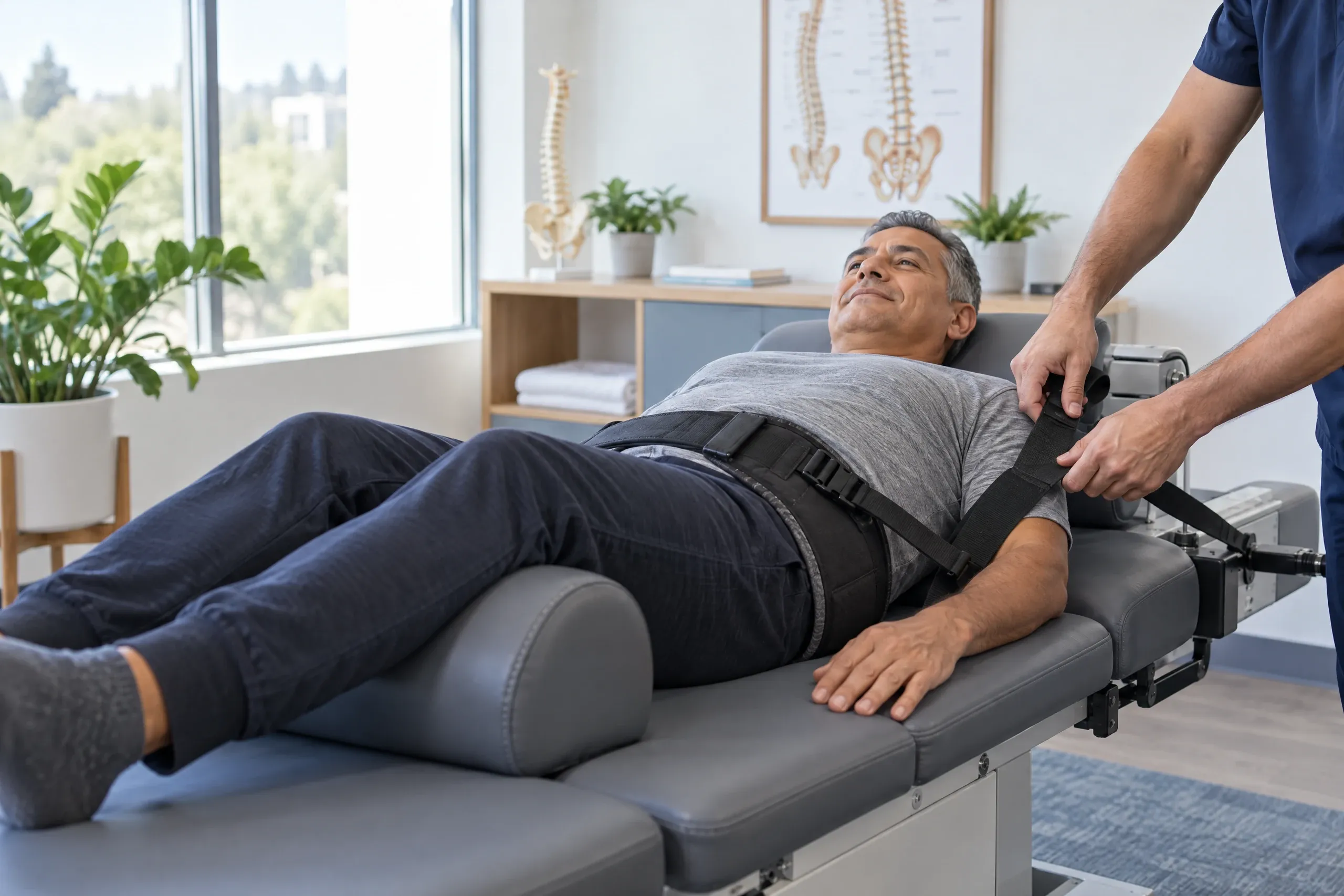
Spinal Decompression Therapy
Gentle, computer-controlled traction on the Triton 6M to ease disc pressure and nerve pain.
Learn More
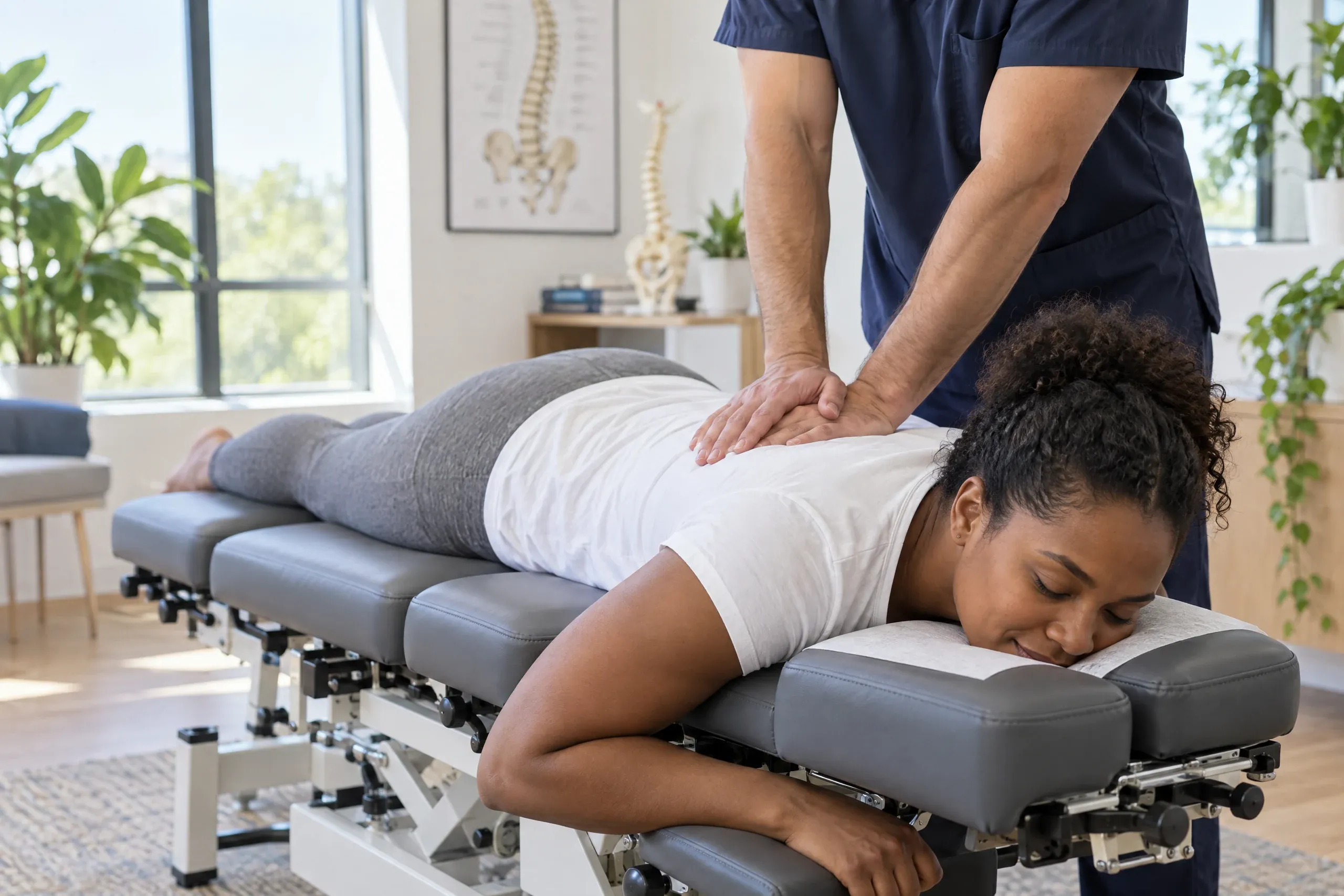
Chiropractic Adjustments
Precise, hands-on spinal adjustments that restore alignment, ease pain and help you move freely.
Learn More 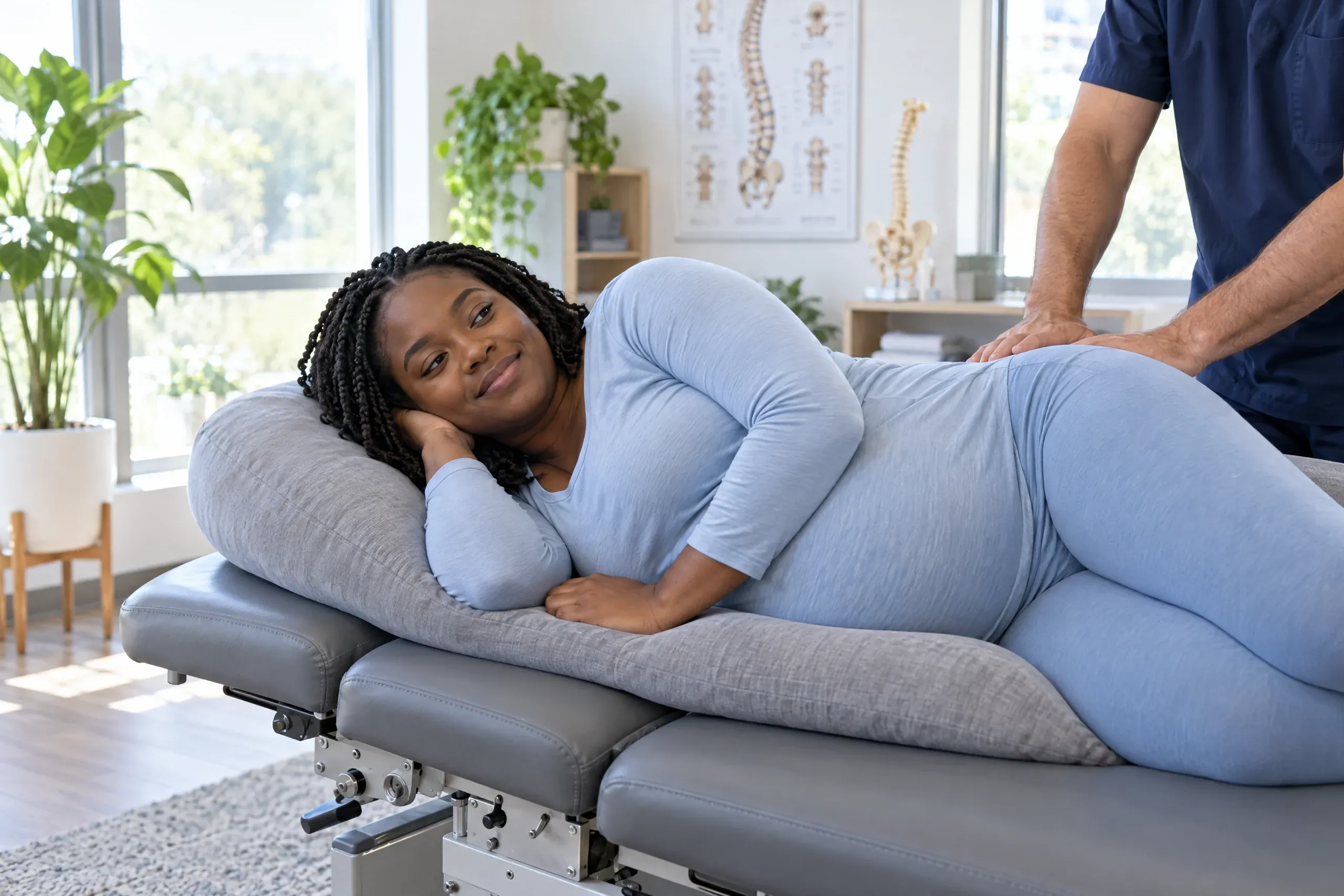
Prenatal Chiropractic
Gentle, pregnancy-safe adjustments for back, hip and pelvic comfort as your body changes.
Learn More Your Questions
Frequently Asked Questions
About Herniated and Bulging Discs
Can a herniated disc heal without surgery?

Yes, many can. Research shows that a large share of lumbar disc herniations shrink over time, and most people improve with conservative care. Surgery is usually reserved for severe or progressive nerve weakness, or pain that does not respond to several weeks of care.
What is the difference between a bulging disc and a herniated disc?
A bulging disc spreads outward past its normal edge while the outer ring stays intact. A herniated disc has a tear that lets the inner gel push through. Herniations are more likely to irritate a nerve root and cause leg or arm symptoms.
Is spinal decompression safe for a herniated disc?
For most patients without red flags, decompression is a gentle, non-surgical option. Dr. Worthington screens you first, since conditions such as fractures, advanced osteoporosis, pregnancy or spinal implants may make it a poor fit. The Triton 6M table adjusts force gradually for comfort.
Will a chiropractic adjustment make my disc worse?
Dr. Worthington chooses techniques based on your exam. For irritated discs he often uses gentle methods such as Cox Flexion Distraction rather than forceful twisting. If your findings suggest care outside our office is safer, we will refer you to the right provider.
How long does it take to feel better?
It varies by person and by how long symptoms have been present. Many patients notice some change within the first few weeks of consistent care, while longstanding disc problems may take longer. We review your progress regularly and adjust the plan as needed.
What can I do at home to ease disc pain?
Stay gently active with short walks, avoid long periods of sitting, and use good lifting mechanics. Our guide to stretches for lower back pain covers safe movements, but stop any stretch that sends pain further down your leg.
When should I go to the ER instead of a chiropractor?
Go to the emergency room right away if you have new bladder or bowel control problems, numbness in the groin or inner thighs, rapidly worsening leg weakness, or back pain with fever. These symptoms need urgent medical evaluation before any chiropractic care.
- Hours
- Monday to Friday, 8AM to 6PM
- Phone
- (901) 519-7777
Ready to Feel Better?
Schedule Your Appointment
Scientific References
- Kreiner DS et al., Spine Journal. (2014). North American Spine Society evidence-based clinical guideline for the diagnosis and treatment of lumbar disc herniation with radiculopathy. PMID: 24239490.
- Deyo RA et al., New England Journal of Medicine. (2016). Clinical review of herniated lumbar intervertebral disk, noting that most patients improve with conservative management. PMID: 27144851.
- Chiu CC et al., Clinical Rehabilitation. (2015). Systematic review of the probability of spontaneous regression of lumbar herniated disc, which was common and highest for extruded and sequestered herniations. PMID: 25009200.
- Brinjikji W et al., American Journal of Neuroradiology. (2015). Systematic review showing disc bulges and degeneration are common on imaging in people without pain. PMID: 25430861.
- Apfel CC et al., BMC Musculoskeletal Disorders. (2010). Restoration of disk height through non-surgical spinal decompression was associated with decreased discogenic low back pain. PMID: 20615252.
- Amin RM et al., Current Reviews in Musculoskeletal Medicine. (2017). Lumbar disc herniation review covering presentation, natural history and nonoperative treatment. PMID: 28980275.